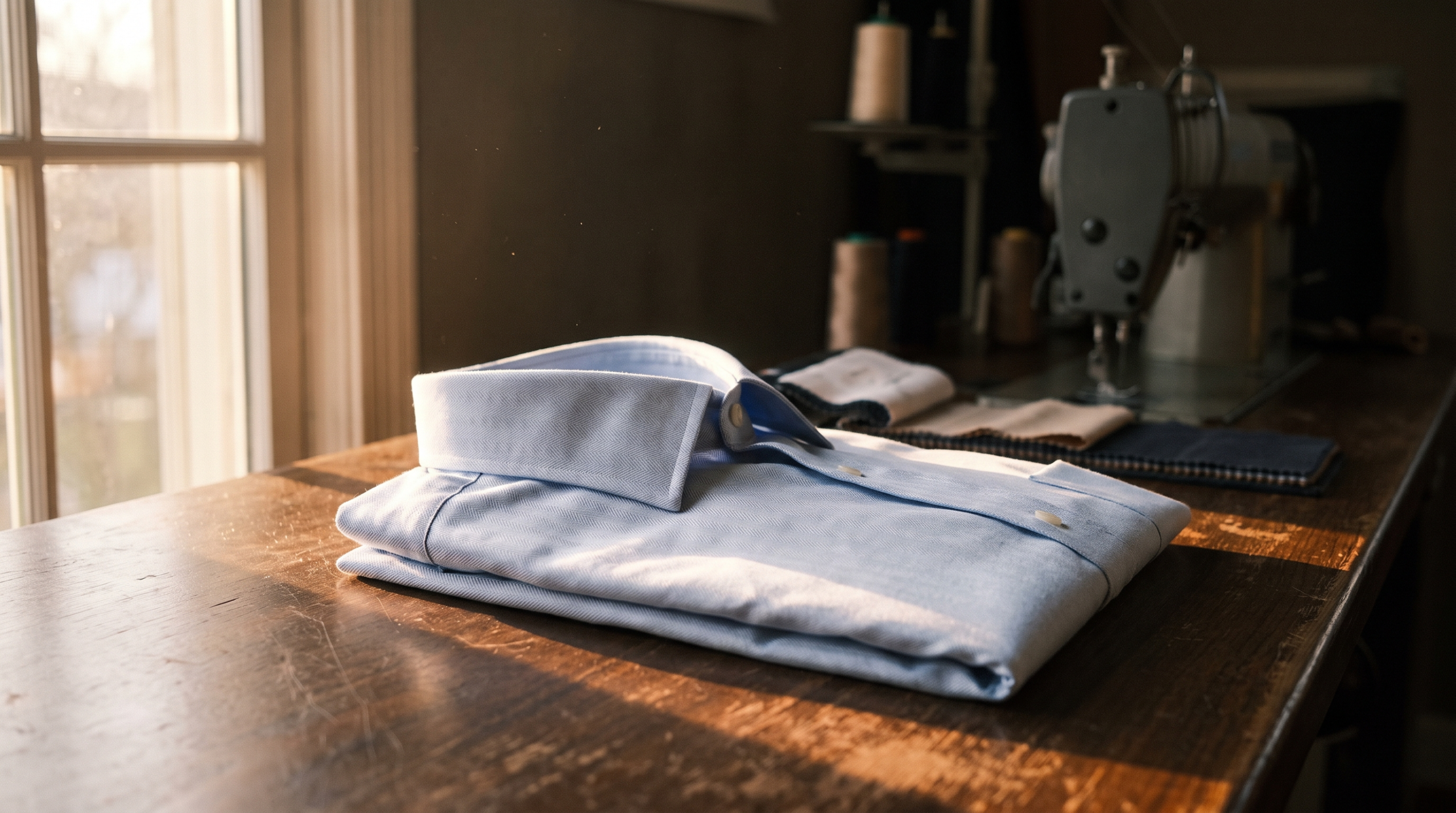

A shirt sits closer to the body than a jacket and hides nothing. Starting at $180, it is an accessible way to learn what properly fitted clothing actually feels like — and to see the difference clearly.
Most people come to bespoke through a suit, usually for a wedding or a particular occasion. It is a reasonable way in, but it is also the most expensive one, and it means your first experience of custom clothing is tied to a deadline.
A shirt is the quieter entry point. You wear it far more often, it reveals fit more honestly than tailoring does, and the commitment is a fraction of the cost.
Why a shirt shows fit more clearly
A jacket is built with structure between you and the cloth — canvas, padding, lining. Those layers do real work, and part of that work is smoothing over small discrepancies in how a garment sits.
A shirt has none of that. It is one layer of cloth against your body, so every proportion is visible: how the collar meets your neck, where the shoulder seam lands, whether the sleeve twists when you move your arm. If a shirt fits properly, you notice immediately. If it does not, you notice that too.
Worth knowing. Even when neck and sleeve sizes are available separately, ready-to-wear shirts may not accommodate your shoulders, posture, or preferred body fit.
What to specify on your first shirt
There are more options than most people expect, and it is easy to over-think a first commission. These are the choices that genuinely affect how the shirt wears.
Collar shape and height
The single most visible decision. A taller collar suits a longer neck; a shorter one keeps proportions balanced on a shorter neck. Spread versus point affects how it sits under a jacket lapel and how it looks worn open.
Cuff style
Barrel cuffs for everyday wear, French cuffs for formal occasions and cufflinks. Worth deciding before fabric, because a French cuff asks for slightly different sleeve length to sit correctly under a jacket.
Body cut
How much room through the chest and waist. Tell us honestly whether you tuck in all day or untuck in the evening — the two call for different lengths and different shaping through the hip.
Fabric weight and weave
Poplin is smooth and crisp; twill is softer and resists creasing; oxford is heavier and more casual. For a first shirt, a mid-weight poplin in white or pale blue will see the most wear and teach you the most about what you want next.
What we keep on file
A shirt commission gives us measurements and, more usefully, information about your posture and proportions that a measuring tape alone does not capture — how you hold your shoulders, where your neck sits, how your arms hang.
We keep your shirt pattern and fitting notes on file, making future shirt orders simpler. If you later commission a suit, those records provide useful background, although a suit requires its own measurements, pattern, and fittings.
What it costs
Custom shirts run from $180 to $1,200. Pricing depends primarily on your choice of fabric, with additional options affecting the final cost. Full detail sits on the pricing page.
Many clients order two or three at once, which makes sense: the pattern work happens once, and having several in rotation extends the life of each. If you are considering a suit later, the reasoning on cloth and construction is in how much a custom suit costs.
Start with a shirt. Your first consultation is a simple way to discover the difference custom clothing can make.
