

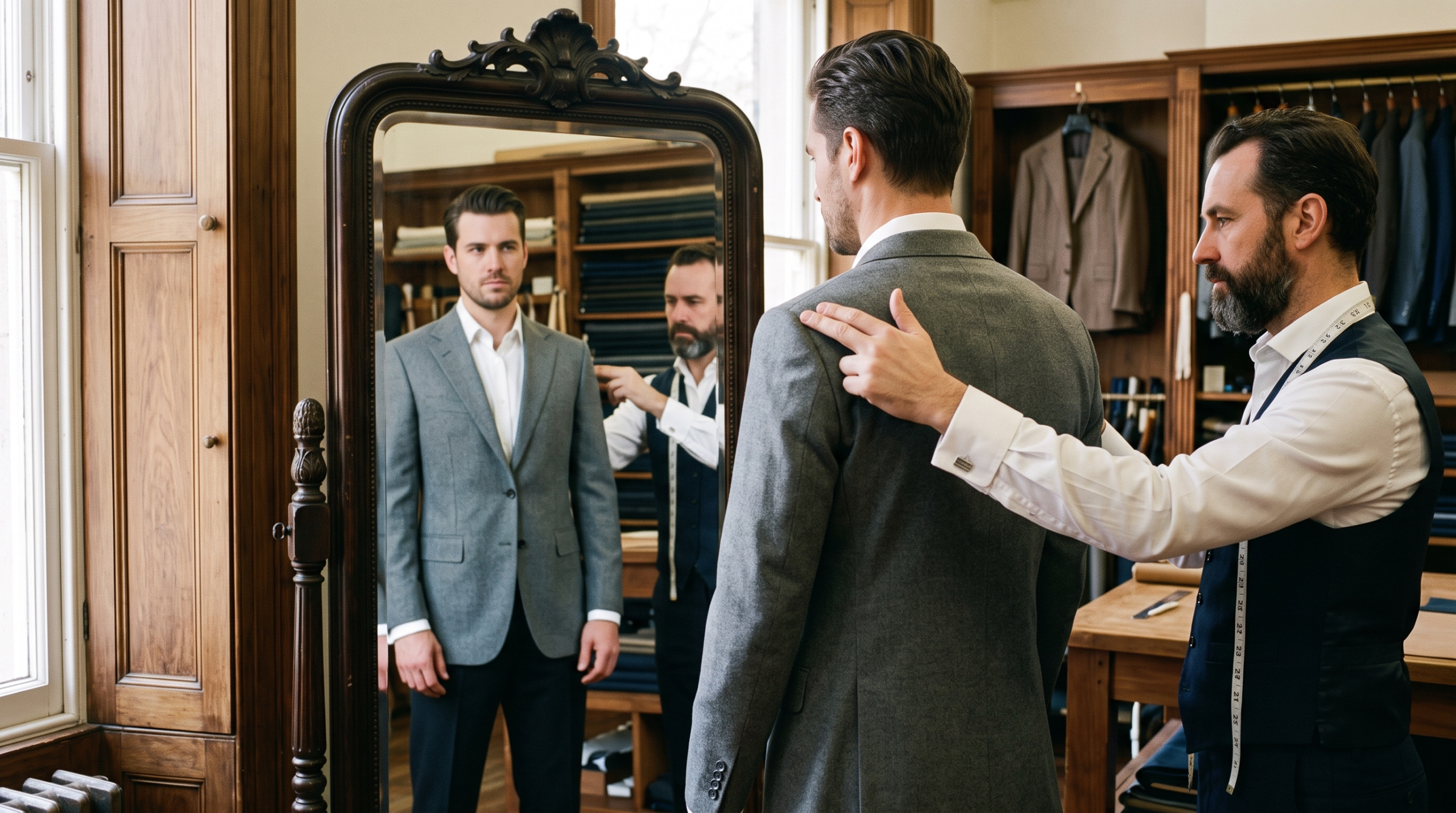

Start with the shoulders. They establish the shape of the jacket and are among the most difficult areas to alter. A clean shoulder line gives the rest of the garment a strong foundation.
Comfort matters, but it does not tell the whole story. A jacket can feel comfortable and still fit poorly. A well-fitted jacket should follow your shape while allowing you to move naturally.
These six checks take just a few minutes in front of a mirror. Stand as you normally would, with your arms relaxed. Avoid pulling your shoulders back or holding in your stomach.
01
The shoulders
The jacket should follow your shoulders smoothly, without obvious dents, pulling, or excess fabric at the top of the sleeves. On a traditionally fitted jacket, the shoulder seam generally sits near the point where your shoulder meets your arm, although its exact position depends on the design.
Can it be altered? Sometimes, but shoulder alterations are complex and can be expensive. If a major adjustment is needed, another jacket may be a better starting point.
02
The button and front
On a two-button jacket, fasten the upper button and leave the lower one undone. The front should lie smoothly. Strong X-shaped wrinkles around the button suggest that the jacket is too tight or that its balance needs attention. Lapels that lift away from your chest can also indicate a fit or posture mismatch.
Can it be altered? Often. The available adjustment depends on the seam allowance, construction, and position of the pockets.
03
The collar
The jacket collar should rest comfortably against your shirt collar when you stand naturally. Look from the side, or ask someone to check for a noticeable gap at the back of your neck. A collar gap can come from several causes, including shoulder shape, posture, or the balance of the jacket. It does not automatically mean you need a smaller size.
Can it be altered? Minor gaps can sometimes be improved. Larger problems involving posture or jacket balance are more difficult to correct after the garment is finished.
04
The sleeves
With your arms relaxed, the jacket sleeves should generally finish around your wrists, allowing approximately ¼–½ inch of shirt cuff to show. Check each side separately. Differences in shoulder height and arm length are common, and sleeve lengths should reflect them.
Can it be altered? Usually. Working sleeve buttonholes can limit how much the sleeves can be shortened or require a more involved alteration.
05
The jacket length
For a classic business suit, the jacket should generally cover your seat and look balanced with your torso and legs. The familiar “cupped hand” test can be a useful reference, but arm length varies, so it should not be the only measure. A shorter jacket may suit a particular style, while an excessively short one can disrupt the overall proportions.
Can it be altered? A jacket can sometimes be shortened modestly, but doing so changes its relationship to the pockets and buttons. Lengthening is usually very limited.
06
The trouser break
Check your trousers while wearing the shoes you plan to wear with the suit. A slight break creates one soft fold where the hem meets the shoe. A no-break finish gives a cleaner line. Multiple folds collecting around the ankle often indicate excess length, although trouser width and personal preference also matter. Some sock exposure can be intentional with a shorter style. The goal is a length that looks considered and works comfortably when you stand, walk, and sit.
Can it be altered? Usually. Shortening is straightforward; lengthening depends on the fabric available inside the hem.
Why posture matters
Two people with the same chest and waist measurements can need very different jackets.
A rounded upper back, forward shoulders, or one shoulder sitting lower than the other can change how the collar, chest, and back of a jacket behave. Standard sizes may suit some people well, while others need more individual adjustments.
Alterations can improve many aspects of fit, but substantial changes to shoulder shape or front-to-back balance are harder once the cloth has been cut.
The value of bespoke goes beyond luxury. It allows the pattern to be shaped around your posture, proportions, and the way you move. Learn more in Bespoke vs. Made-to-Measure: What’s the Real Difference?
What we check during a fitting
At Zeglio, a basted fitting allows us to assess the garment while it is still temporarily assembled, before the final finishing.
We examine the shoulder line, collar contact, chest shape, sleeve position, and overall balance. We also check how the garment feels during everyday movements, including reaching forward and sitting down.
Some wrinkles are natural when you move. What matters is identifying excessive pulling, restricted movement, or areas that do not settle properly when you return to a relaxed stance.
These fittings give us the opportunity to refine the garment around you. Explore the full sequence on our process page.
Bring in the jacket that has never felt quite right. We’ll help you understand why and discuss what can be improved.
